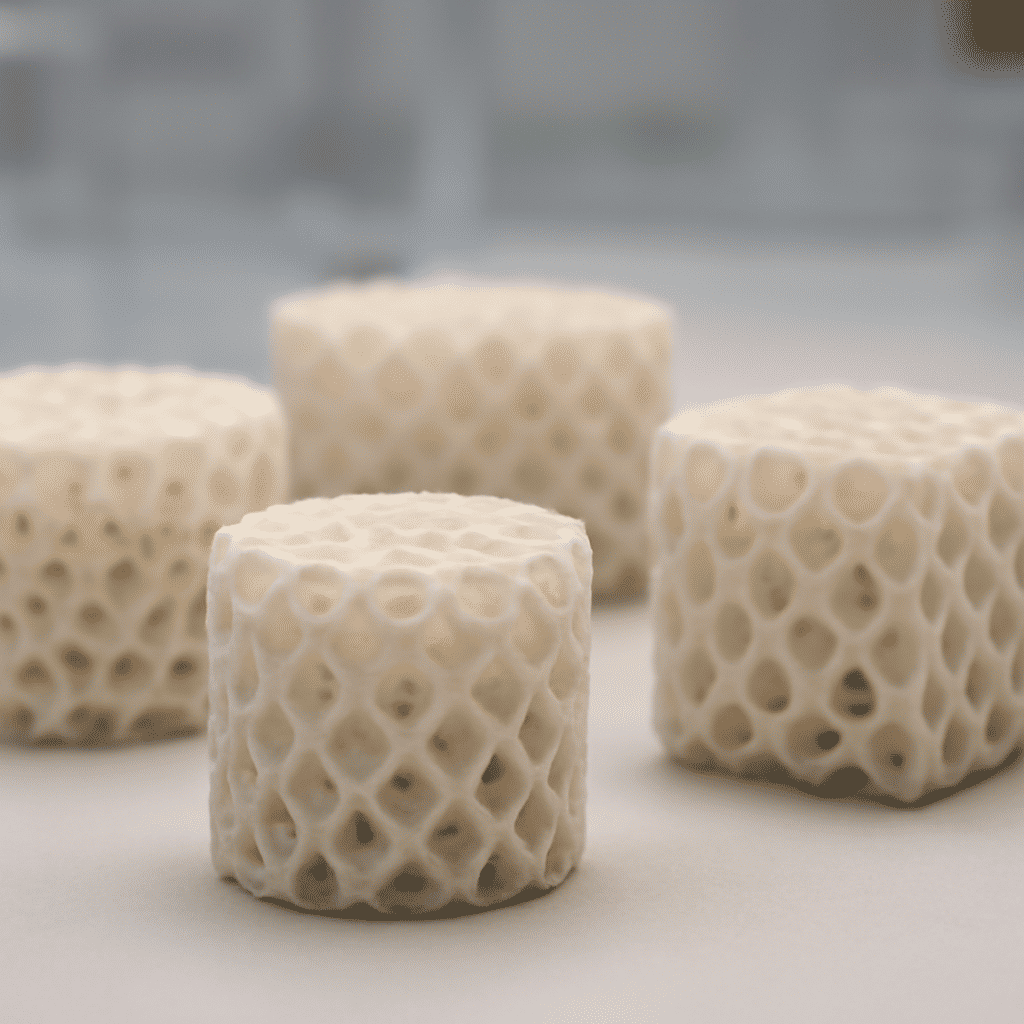
In the realm of modern medicine, the convergence of biology and engineering has paved the way for innovations that were once thought to belong to the realm of science fiction. Among the most promising advances in this interdisciplinary nexus is the development of revolutionary biomaterials for tissue engineering. These biomaterials, specifically engineered to interact favorably with biological systems, are setting the stage for unprecedented advancements in tissue growth and regeneration.
At the heart of this innovation is the quest to create materials that not only support but also enhance the body's natural healing processes. The conventional approach to tissue repair often involves the use of scaffolds—structures designed to mimic the extracellular matrix, providing a framework for new tissue to grow. However, recent developments have shifted the focus towards creating biomaterials that go beyond mere support to actively stimulating cellular processes.
One of the groundbreaking advancements in this field is the design of biomaterials that are bioactive and biomimetic. These materials are engineered to emulate the biochemical cues present in natural tissues. By closely mimicking the body's native tissues, these biomaterials can enhance cellular interactions, promote differentiation, and support the integration of new tissue with the host. This biomimetic approach ensures not only structural compatibility but also functional harmony.
A key area of focus within this research is the development of hydrogels. These water-rich, polymer-based structures have emerged as a cornerstone in tissue engineering due to their versatility and biocompatibility. Hydrogels can be engineered to have properties such as tunable stiffness, degradation rates, and porosity, all of which are crucial for scaffolding transitioning tissues as they grow and mature. Furthermore, hydrogels can be loaded with growth factors and cytokines, offering localized and sustained release to stimulate cell proliferation and differentiation.
Another frontier in the field is the incorporation of nanotechnology into biomaterials. Nanomaterials offer an increase in surface area and a scale that can interact with biological molecules in unique ways. By incorporating nanoparticles or nanofibers into biomaterials, researchers can enhance the mechanical properties, bioactivity, and drug delivery potential of these materials. For instance, nanofibrous scaffolds can closely mimic the fibrous structure of natural tissues, aiding in improved tissue integration and regeneration.
The application potential of these revolutionary biomaterials spans a broad range of medical fields. In regenerative medicine, they offer hope in the repair of damaged tissues and organs, potentially alleviating the need for organ transplantation. In orthopedics, they can be used to heal bone fractures more effectively or to engineer joint cartilage. And in the field of wound healing, advanced biomaterials promise faster and more efficient recovery from injuries.
Despite these promising developments, challenges remain. The quest for the ideal biomaterial—one that combines all desired mechanical, chemical, and biological properties—requires ongoing research and multidisciplinary collaboration. Moreover, ensuring the safety and biocompatibility of new biomaterials through rigorous testing remains a critical step towards their clinical application.
In conclusion, the ongoing research in revolutionary biomaterials for tissue engineering is transforming the landscape of medical science. By marrying engineering principles with biological insight, these innovations offer the possibility of not only repairing but regenerating tissues, heralding a new era of healing and rehabilitation. As research continues to advance, supported by cutting-edge technology and interdisciplinary efforts, the future of medical treatment will likely be fundamentally reshaped, offering improved quality of life for patients worldwide.